
- Home
- Insulation
- Ventilation improvements
Black mould on the walls? A sealed house has to breathe.
Usually it is condensation rather than damp, and it is fixable. Extract fans, positive input ventilation and heat recovery, fitted across Chertsey and Surrey.
Why a warmer house needs more air
Every measure that stops heat leaving also stops air leaving. That is the point, and it is also the problem.
A house makes a lot of moisture
Cooking, washing, drying clothes and breathing. It all goes into the air in the house and it has to leave somehow.
Old houses leaked it away
Draughts through floors, windows and chimneys took the moisture with them. It was wasteful, and it was also doing a job.
Insulating stops the draughts
Which is the whole point. But if nothing replaces that airflow, the moisture stays in, finds the coldest surface, and condenses on it.
Controlled ventilation replaces it
Air changed deliberately, in the right places and the right amount, instead of accidentally through gaps.
Three ways to do it
From a fan in a bathroom to a whole-house system, and the right one depends on how tight the house already is.
- Extract fans, done properly
- Humidity-sensing fans in the bathroom and kitchen, ducted the shortest way to outside. Most condensation cases start and finish here.
- Positive input ventilation
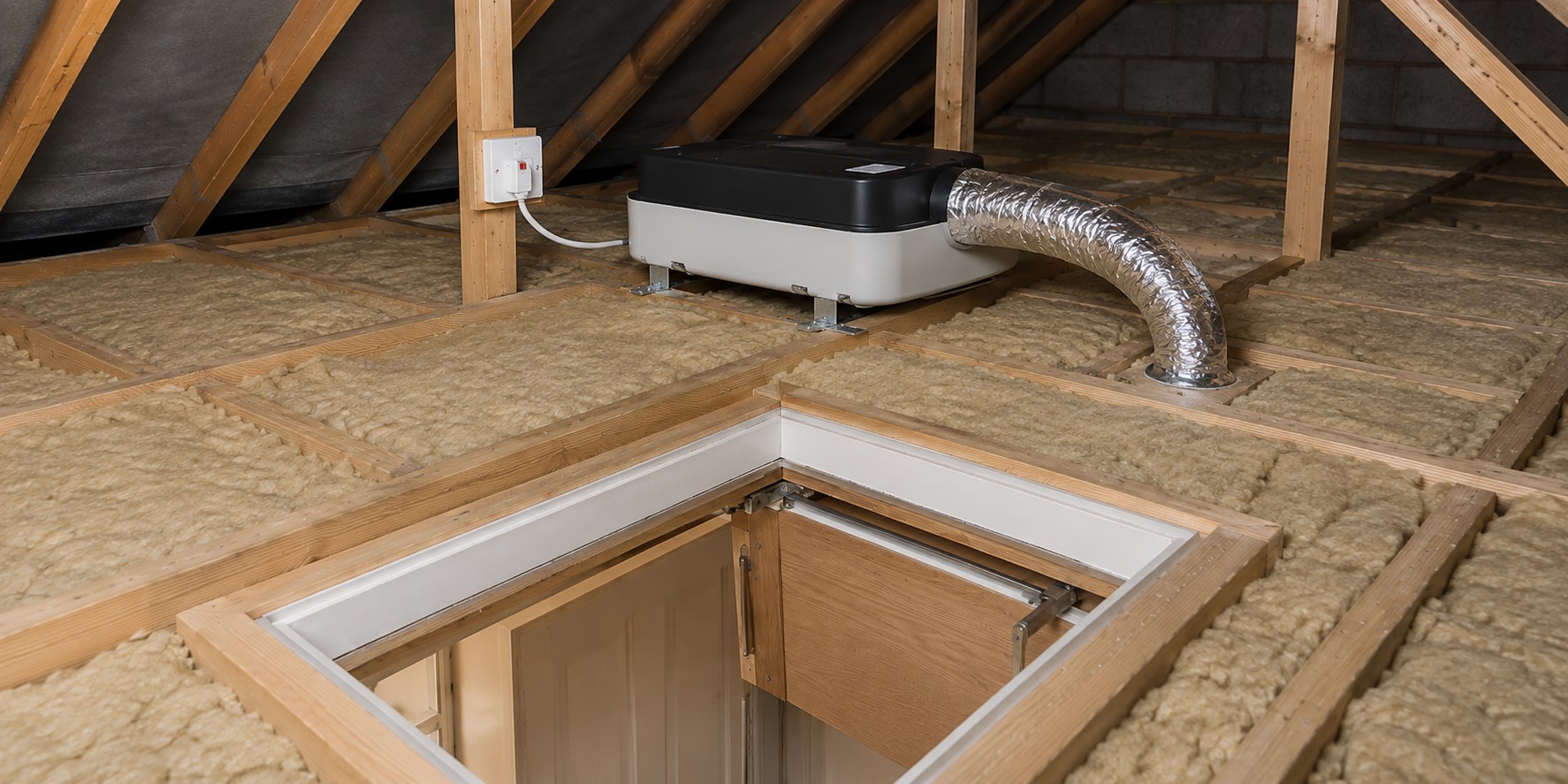
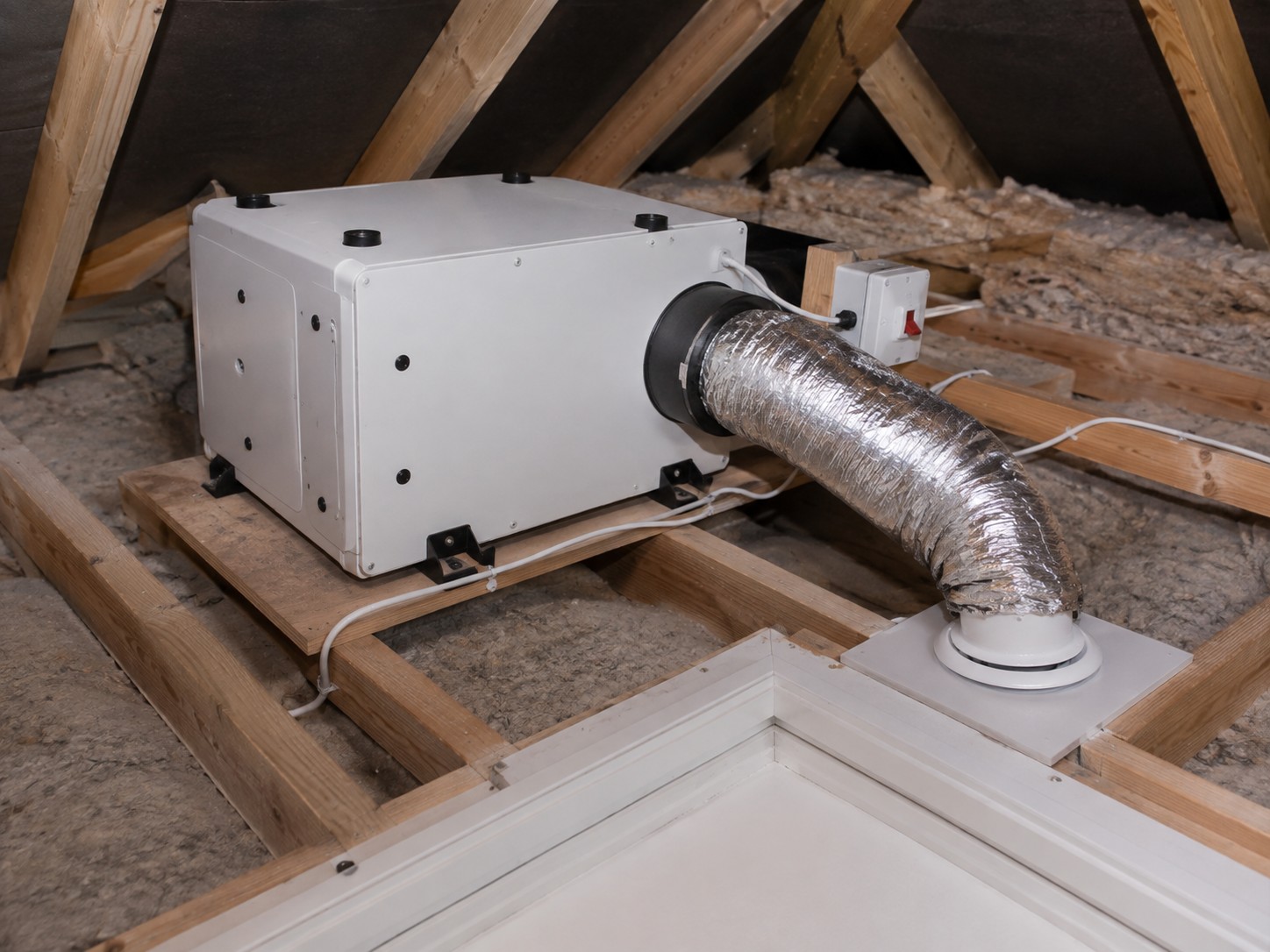
- A quiet unit in the loft gently pushing filtered air into the house, so damp air is displaced rather than left to settle. A common and inexpensive answer for whole-house condensation.
- Heat recovery, MVHR
- Extracts from wet rooms and supplies fresh air to living rooms, passing one through a heat exchanger with the other so most of the warmth stays in. For a well sealed house it is the proper answer.
- Trickle vents and background airflow
- The cheapest part, and the part most often missing. New windows without trickle vents in a tightened house cause problems.
What does the damp look like?
Condensation, a leak and rising damp look different and want completely different work. Two questions gets you close.
Where is it?
When is it worst?
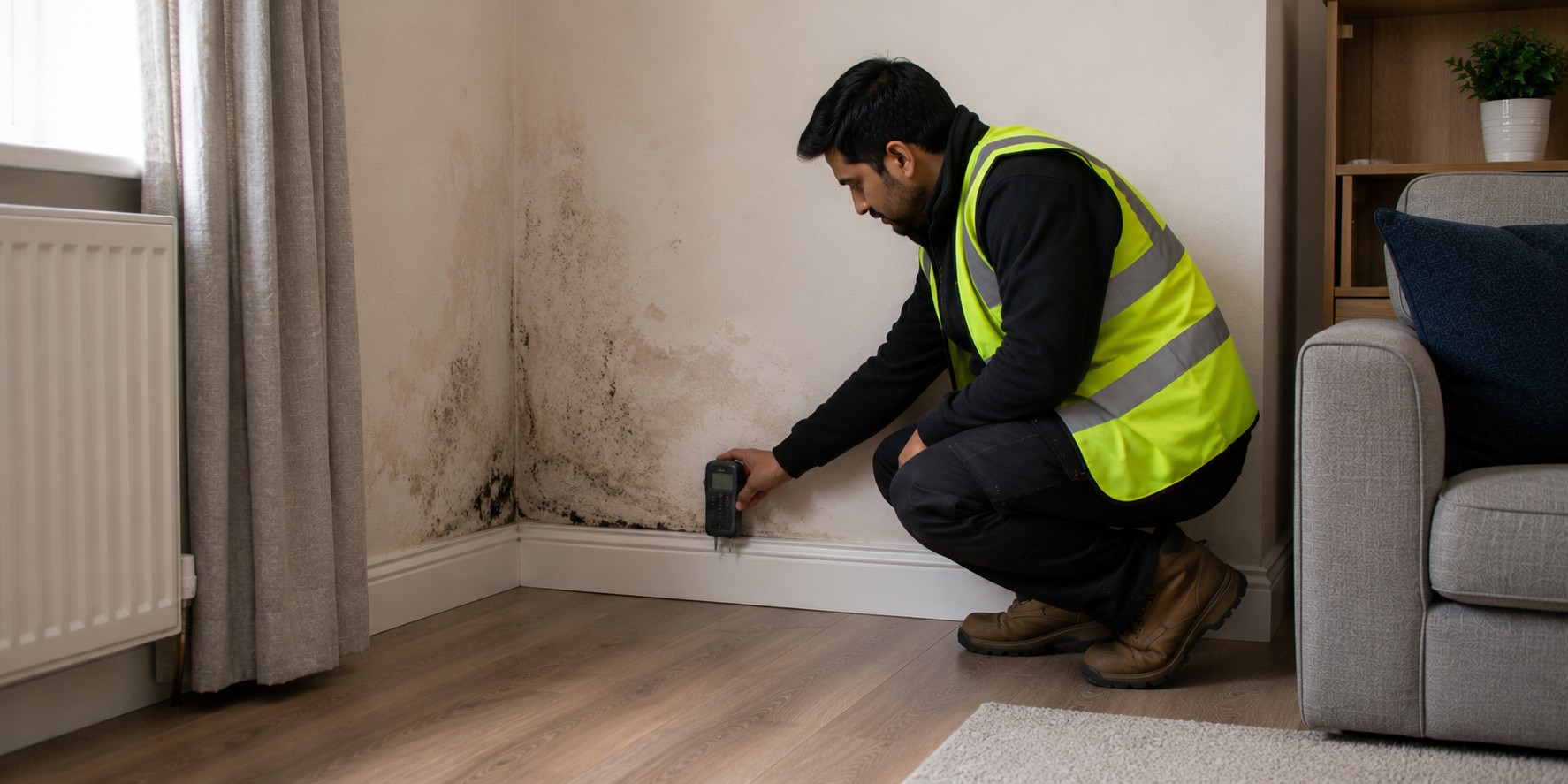
This is a rule of thumb, not a diagnosis. A damp and mould survey measures moisture and finds the actual source before anybody specifies a fix.
This reads like condensation
Cold surfaces, moist air and not enough ventilation. It is the most common and the most fixable, and it is a ventilation job rather than a damp-proofing one.
How the job runs
What you are seeing
Where the mould is, when it appears, and what changed in the house before it started.
Measured, not guessed
Humidity and moisture readings, and where the cold surfaces actually are.
The specification
Fans, PIV or MVHR, sized to the house rather than to what is in the van.
Installation
A fan is a morning. Whole-house MVHR with ducting is a few days.
Commissioning
Flow rates measured and set, and the controls explained.
After the work is signed off
Ventilation is the one measure with a filter in it.
Your paperwork, on the day
Commissioning record with measured flow rates, electrical certificate and the manufacturer documentation.
A two year guarantee
In writing, transferable if you sell, and insurance-backed.
Filters, and when to change them
PIV and MVHR have filters. We tell you which, how often, and where to get them.
One number, and the same team
If the mould comes back you ring us, and we come and find out why.
Two things people ask about next
Both have a page of their own.
The questions we get asked most
Is black mould dangerous?
It is worth dealing with rather than living alongside, and the usual cause is condensation, which is fixable. If anyone in the house has a respiratory condition, treat it as a priority.
Will an extract fan be enough?
Often yes, if it is the right fan, in the right place, ducted properly and actually running. A lot of the fans we see are none of those things.
What is PIV?
Positive input ventilation. A quiet unit in the loft pushes gently filtered air into the house so damp air is displaced rather than sitting on cold surfaces. It is inexpensive and it works well for whole-house condensation.
What is MVHR, and do I need it?
Mechanical ventilation with heat recovery. It changes the air while keeping most of the warmth. It suits a well sealed house; on a draughty one it is overkill.
I had new windows and now I have mould. Why?
New windows are far tighter than old ones. If nothing replaced the airflow they used to leak, the moisture stays in. Trickle vents and extract are usually the answer.
Do you treat the mould as well?
The visible mould can be cleaned, but it comes back unless the moisture is dealt with. Fixing the cause is the job.


















Often worth doing at the same time
Same team, same survey, one visit where it makes sense.
Book a free survey for ventilation improvements
Tell us about the property and we will come and look at it. No charge, and the figures come in writing afterwards.
- A proper survey, and the figures in writing
- Any grant you qualify for, applied for by us
- No charge, whether or not you go ahead
- Weekdays 8am to 5pm, on 01932 550828
Tell us where it appears, and when.
That plus a look at the house is usually enough to say whether it is a ventilation job or something else. The survey is free.