
- Home
- Renewable Energy
- Air conditioning
Cool in July. Warm in January.
Air conditioning on its own, or designed alongside an air source heat pump so the two share the work. F-Gas certified, across Chertsey and Surrey.
How air conditioning actually works
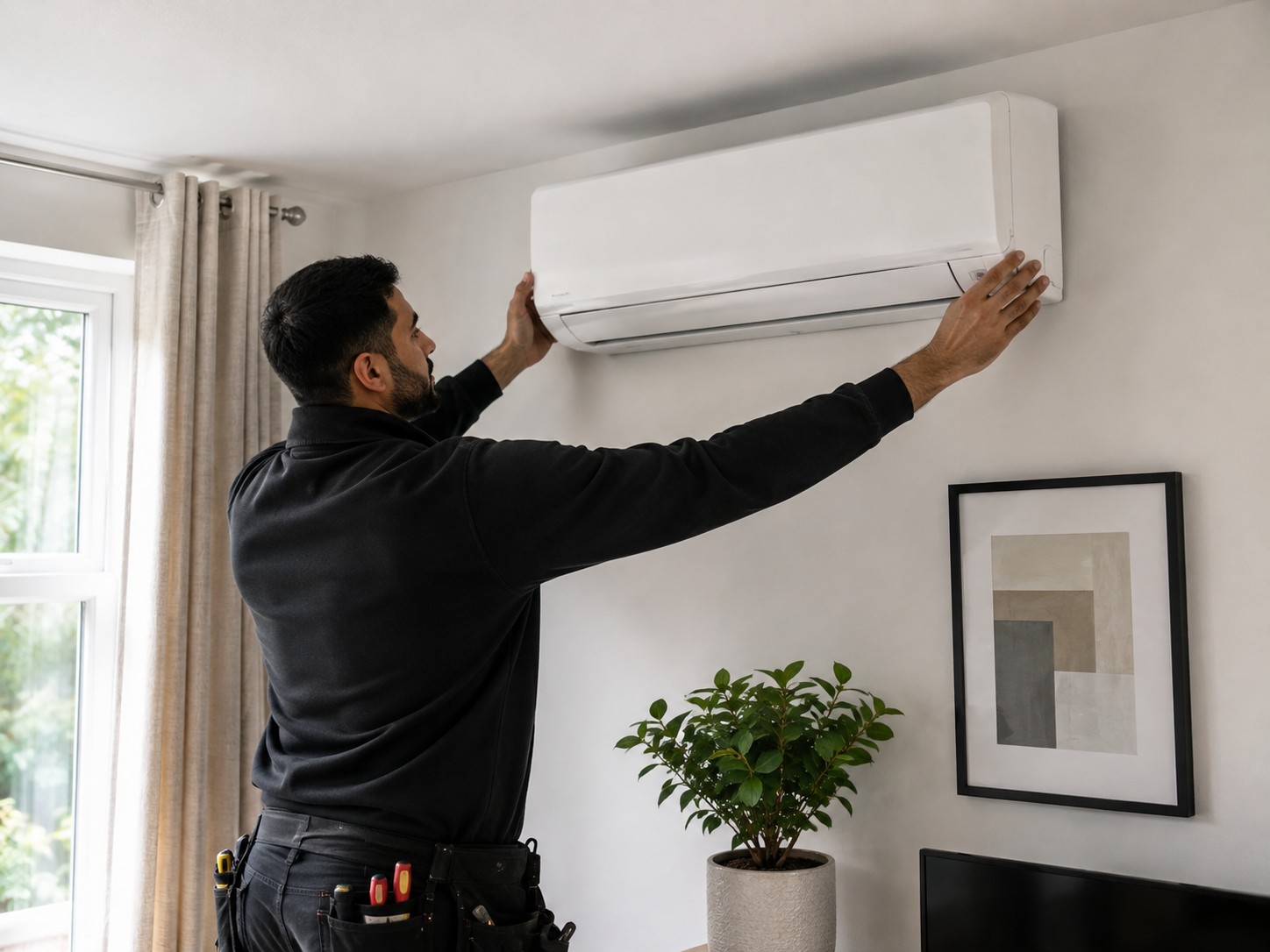
It is a heat pump. In summer it moves heat out of the room; in winter it runs the cycle backwards and moves heat in.
Refrigerant carries the heat
A thin pair of insulated pipes between the unit in the room and the unit outside. No ductwork, no wet system, no radiators.
In summer it takes heat out
Room air passes over a cold coil, the heat goes outside, and the room settles at whatever you set it to.
In winter it runs backwards
The same cycle reversed pulls heat out of the outside air and puts it into the room, at three to four units of heat per unit of electricity.
Each room decides for itself
One outdoor unit serves several indoor ones, each controlled separately, so the spare room is not heated when nobody is in it.
What gets fitted
Two units and a pipe run between them.
The indoor unit
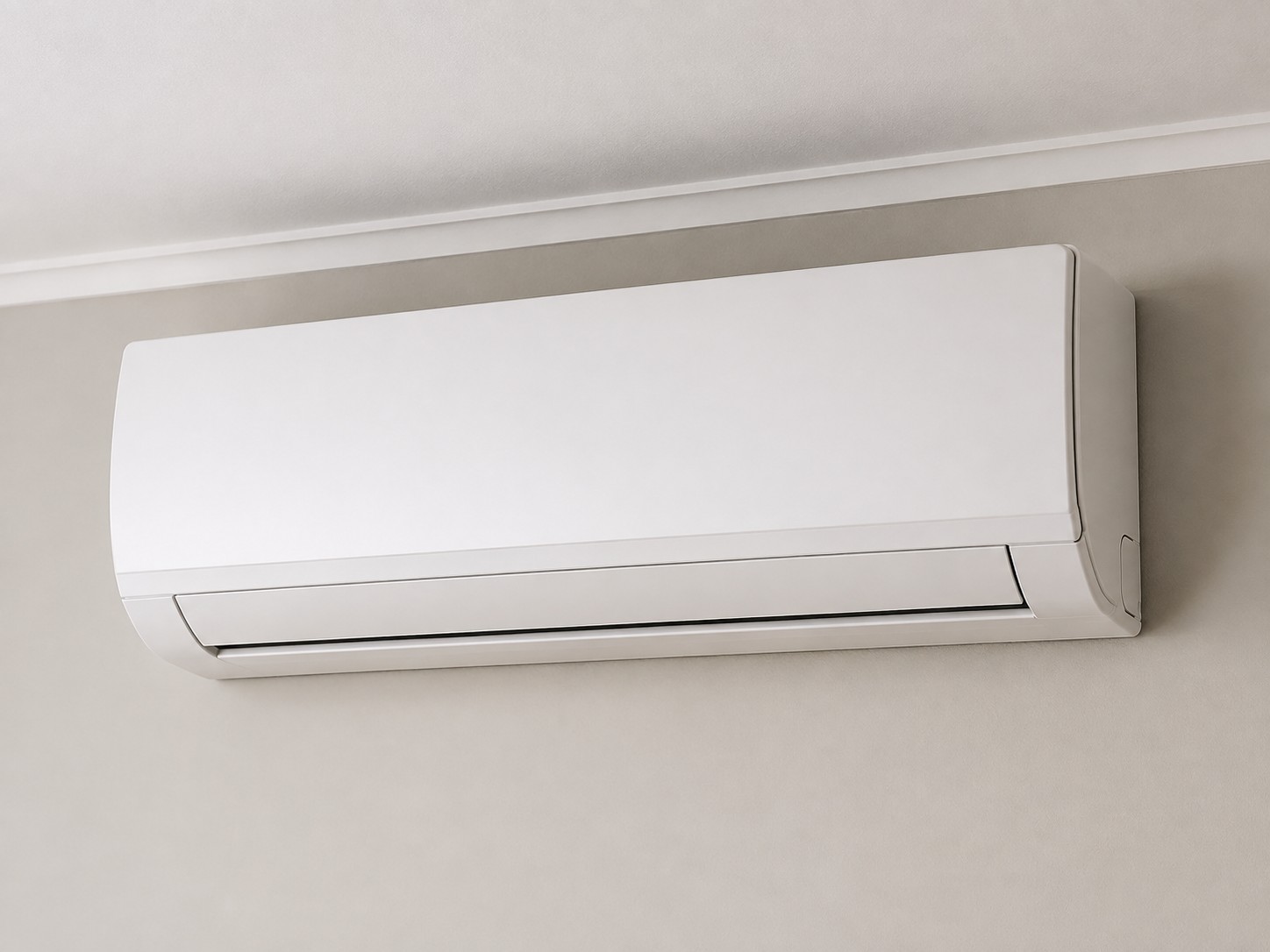
A slim wall head, usually high on an outside wall. Low-profile ceiling and floor-standing versions exist where a wall head will not work.
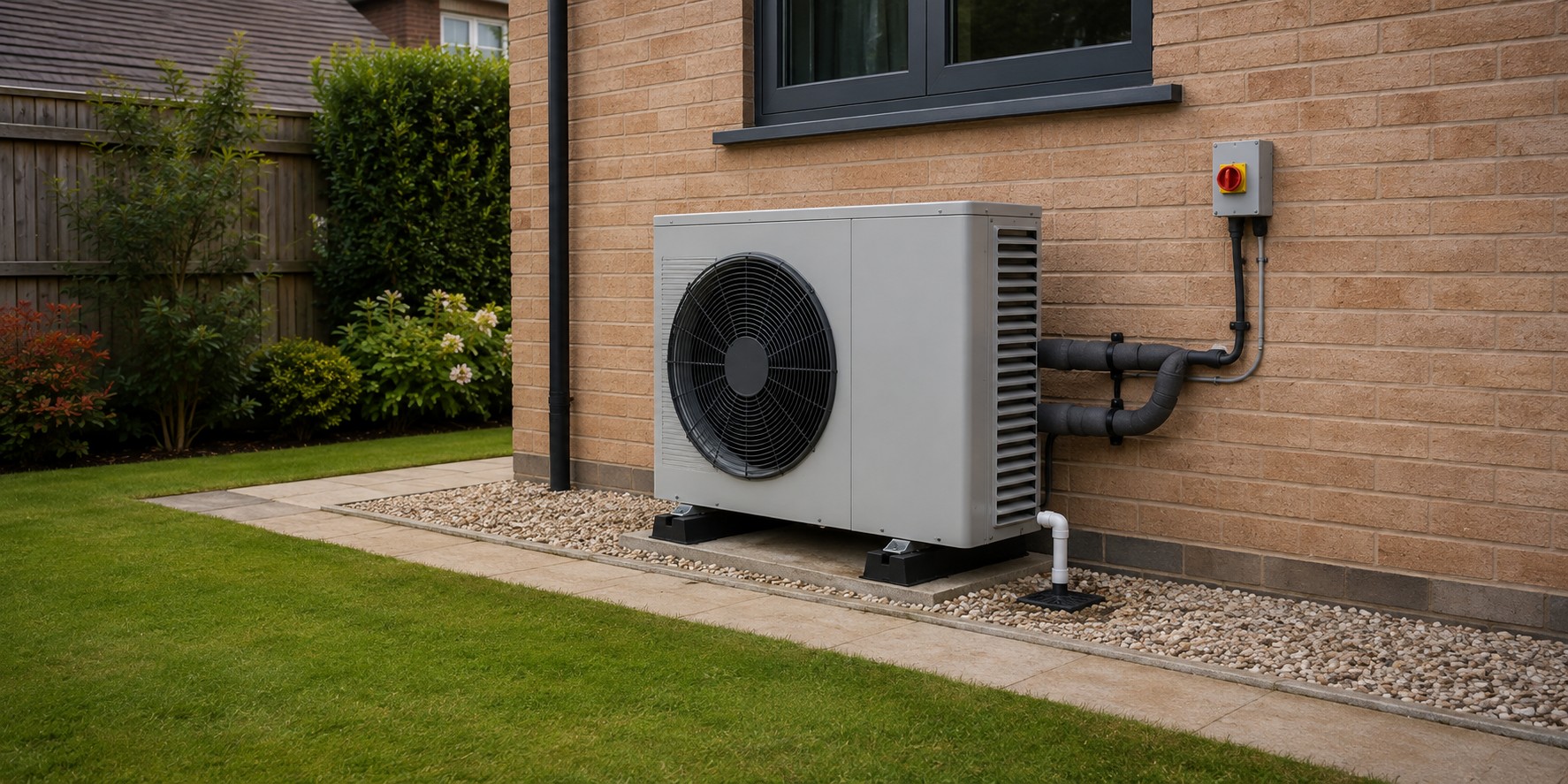
The outdoor unit
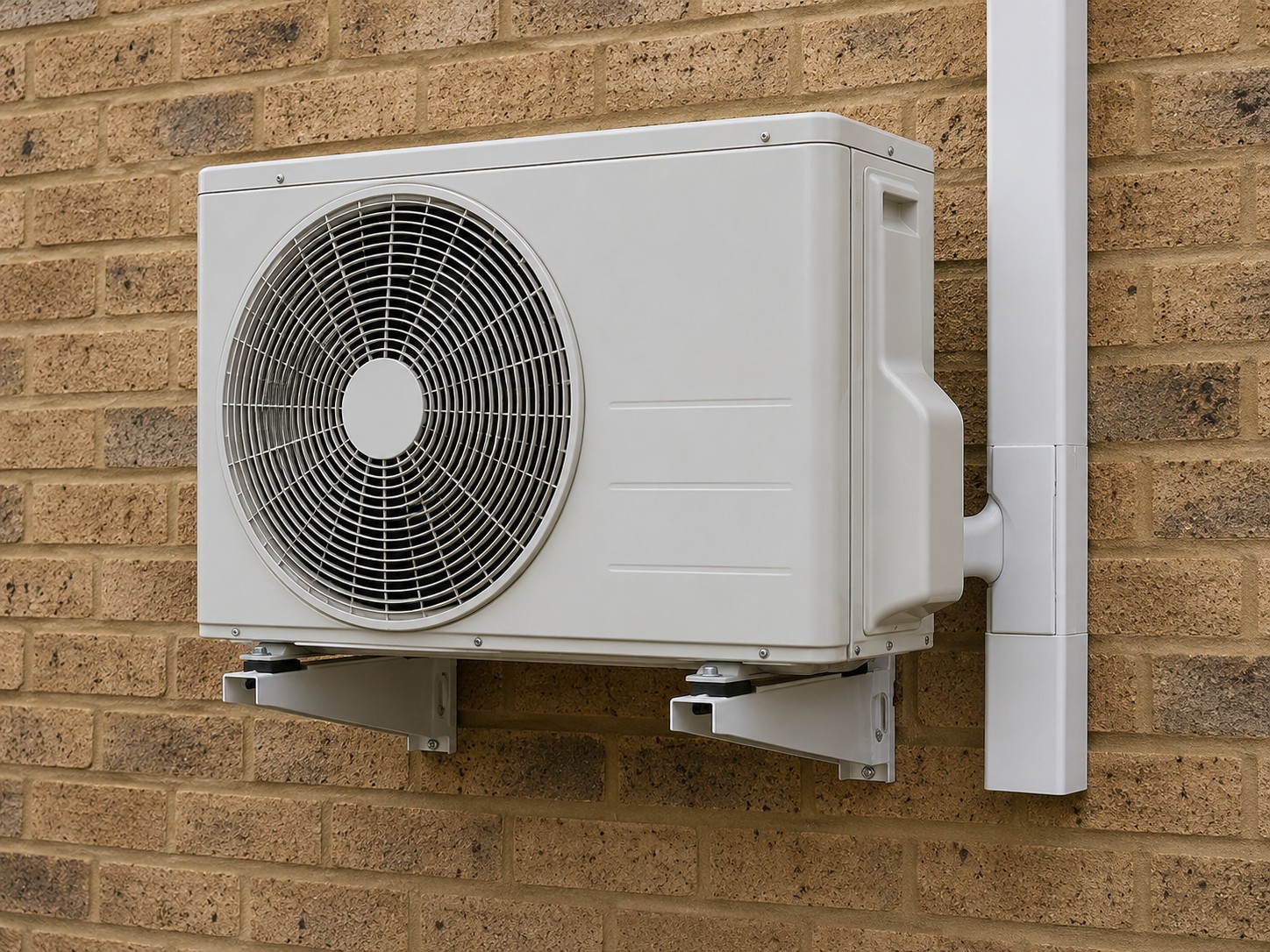
One compact condenser on brackets or a base, sited for airflow and for noise. A single unit can serve several rooms.
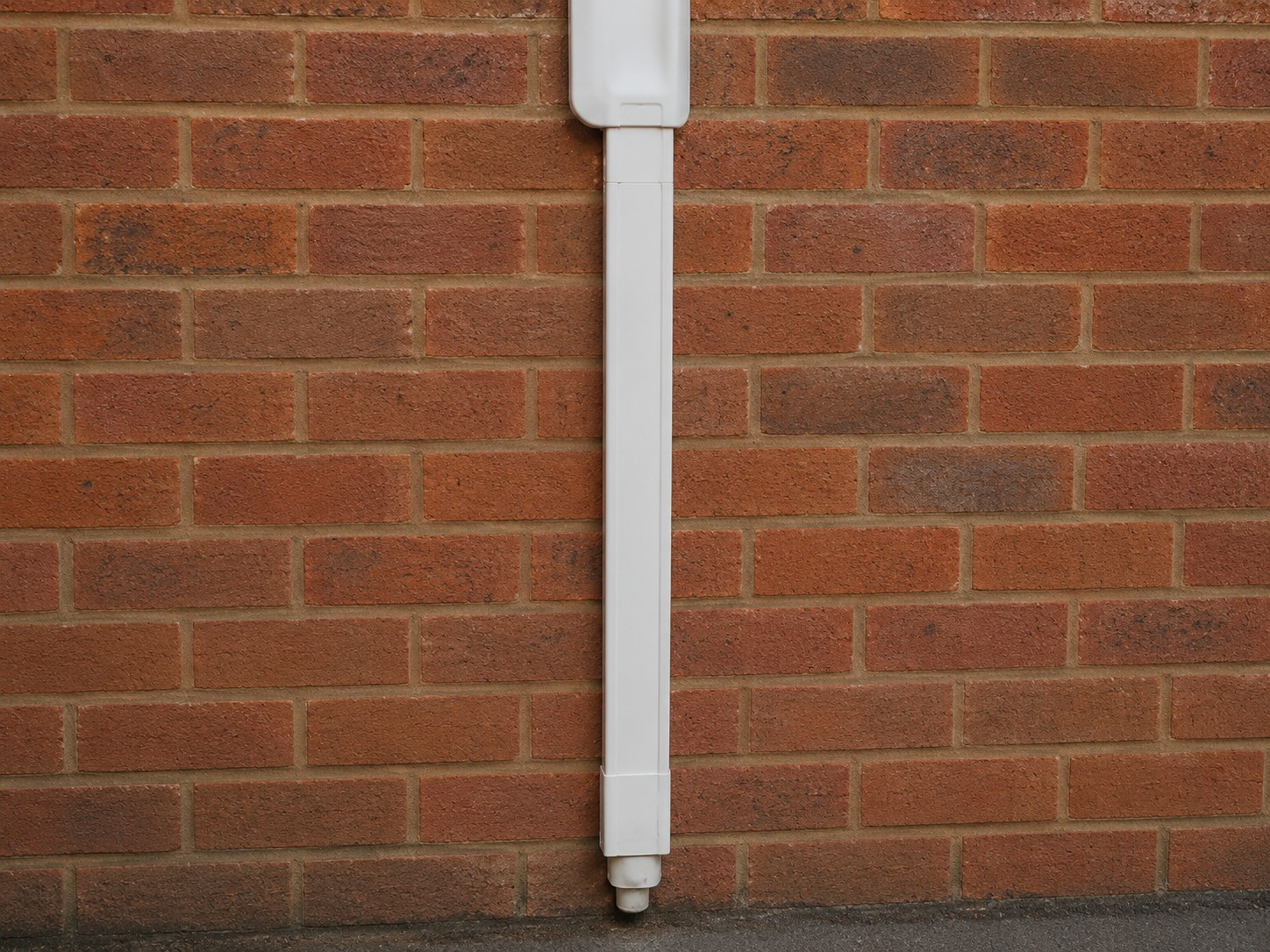
The pipe run
Insulated refrigerant pipework and a condensate drain, boxed in or through the wall where the route allows.
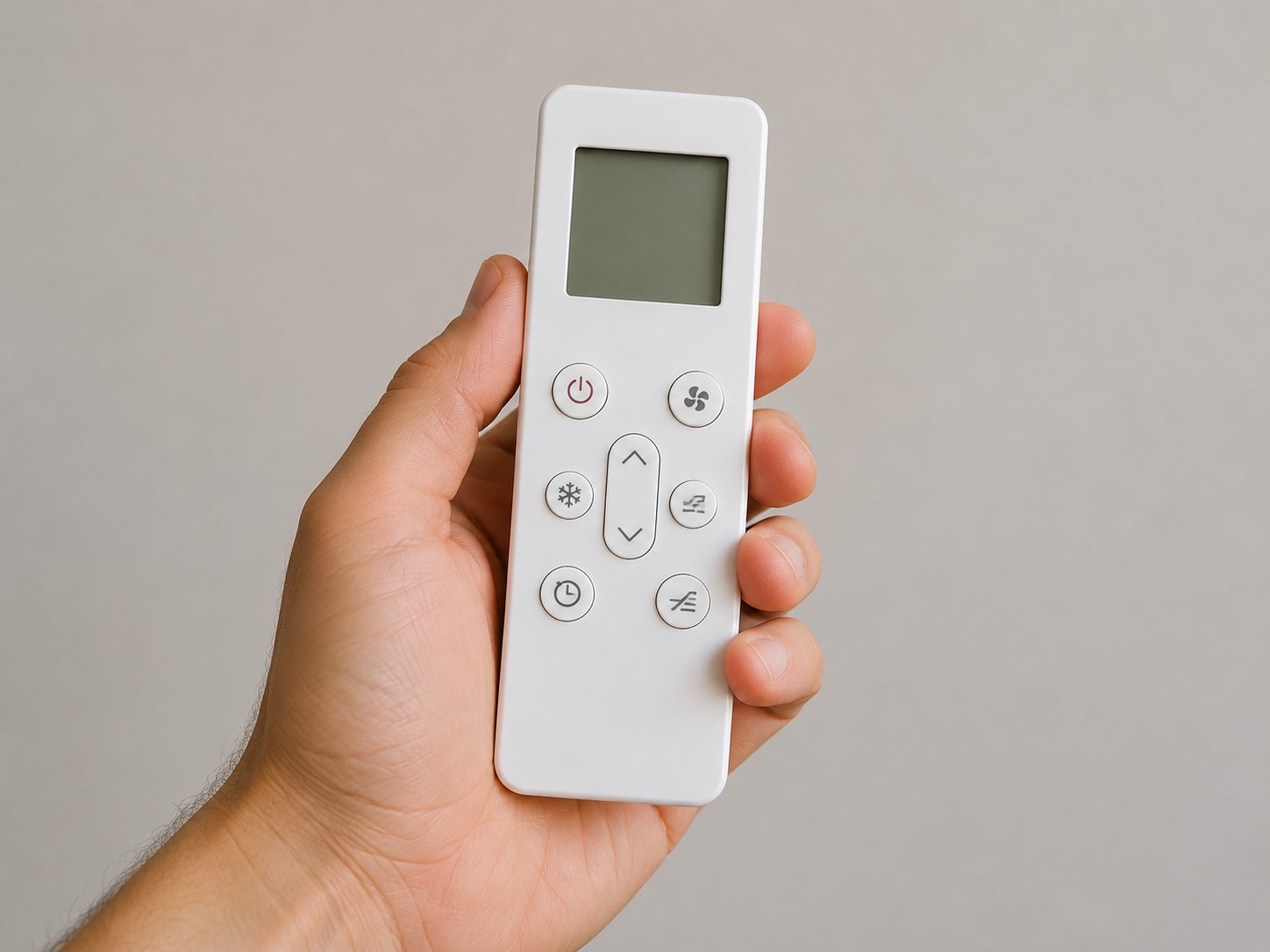
Controls
A handset in the room and an app on your phone. A temperature and a schedule per room.
Where people put them
- Bedrooms
- The most common request and usually the first one. Sleeping through a July heatwave is what most people are actually buying.
- Home offices
- A converted box room or a garden room with a south-facing window is unusable in summer without something.
- Loft conversions
- Warmest room in the house in summer, coldest in winter, and often the hardest to reach with the existing heating.
- Extensions and garden rooms
- Where extending the wet system means lifting floors, one air-to-air unit does both jobs instead.
Which one do you actually want?
Two questions. Most people arrive asking for air conditioning and leave with a clearer idea of which of these three jobs they are buying.
What are you trying to fix?
Your radiators and boiler — staying or going?
Air conditioning on its own
Air-to-air units in the rooms that need them. Nothing else in the house changes.
Air conditioning on its own
Air-to-air units in the rooms that need them. Nothing else in the house changes.
- One outdoor unit can serve several rooms
- Cools in summer, heats those rooms efficiently in winter
- No cylinder, no radiator changes, no wet pipework
- Most homes done in a day
- £2,500 off through the Boiler Upgrade Scheme, and we apply
Air conditioning and a heat pump, together
The heat pump does radiators and hot water. The air conditioning does cooling, and heats the rooms that are hardest to reach.
- £7,500 off the heat pump through the Boiler Upgrade Scheme
- One survey, one design, one programme
- Loft conversions and extensions covered by the air conditioning
- The two are sized against each other rather than separately
- Our own engineers do both parts
An air source heat pump
Whole-house heating and hot water through your existing radiators, with no cooling.
- £7,500 off through the Boiler Upgrade Scheme, and we apply
- Three to four units of heat per unit of electricity
- Needs a hot water cylinder, so a combi is replaced
- Some radiators may need to be larger
- Two to four days on site
Whichever route the answers point at, the survey confirms it.
How the job runs
A look at the rooms
Which rooms, where the indoor units can go, and where the outdoor unit sits without annoying anyone.
The quotation
Units, positions, the pipe route and the full price. If the heat pump route makes more sense, that is priced too.
Any approvals
Most installations are permitted development. Flats, listed buildings and conservation areas we check first.
Installation
Core drilling, pipe run, both units and making good. Most homes are a single day.
Commissioning
Charged, tested, F-Gas records completed, and the controls set up with you.
And then we are still here
Air conditioning wants a filter clean and an annual check.
Your paperwork, on the day
F-Gas records, commissioning sheet, electrical certificate and the manufacturer documentation.
Two years, in writing
Two years in writing, transferable if you sell, and insurance-backed, alongside the manufacturer warranty.
Annual check
Filters, refrigerant charge and drainage. It keeps the warranty valid and stops the efficiency drifting.
One number, not a call centre
You ring the people who fitted it, and we attend within five working days.
Two things people ask about next
Both have a page of their own.
The questions we get asked most
Can I have air conditioning and a heat pump?
Yes, and for a lot of houses it is the right answer. The heat pump does radiators and hot water; the air conditioning does cooling and covers the rooms the wet system struggles with. We design and fit both.
Is air conditioning the same as a heat pump?
It is one. An air source heat pump moves heat into water for your radiators; air conditioning moves it straight into the air in the room. Same principle, different delivery.
Can it heat the whole house in winter?
It heats the rooms it is fitted in, efficiently. Whole-house heating from air-to-air means a unit in every room, which is why most people pair it with a heat pump or keep their existing heating.
Is there a grant for it?
Yes, since April 2026. The Boiler Upgrade Scheme pays £2,500 towards an air-to-air heat pump. It used not to, and a lot of pages still say so. If you go the combined route the air-to-water half attracts £7,500 instead — one grant per property, not both.
Are you certified to handle refrigerant?
Yes. Refrigerant work is regulated under the Fluorinated Greenhouse Gases Regulations. We hold Refcom F-Gas certificate REF1025855 for stationary equipment.
How noisy is it?
The indoor unit is quieter than a fridge. The outdoor unit is about the level of a conversation from a few metres, and position matters, which is why we look before quoting.
Does air conditioning need planning permission?
Usually not — most domestic installations are permitted development. Flats, listed buildings and conservation areas differ and we check yours.
How long does air conditioning take to fit?
Most homes are a single day for one or two rooms. Larger multi-room systems run to two.

























Often worth doing at the same time
Same team, same survey, one visit where it makes sense.
Book a free survey for air conditioning
Tell us about the property and we will come and look at it. No charge, and the figures come in writing afterwards.
- A proper survey, and the figures in writing
- Any grant you qualify for, applied for by us
- No charge, whether or not you go ahead
- Weekdays 8am to 5pm, on 01932 550828
Tell us which rooms.
Which rooms, and roughly how you use them. That is enough for us to say which of the three routes fits and what it would cost. The survey is free.