
- Home
- Insulation
- Internal wall insulation
Warmth built from the inside.
Solid walls insulated from inside, room by room, where the outside of the house has to stay exactly as it is.
What actually happens in the room
The wall gains a layer. Everything attached to that wall comes off first and goes back afterwards, which is most of what the job actually is.
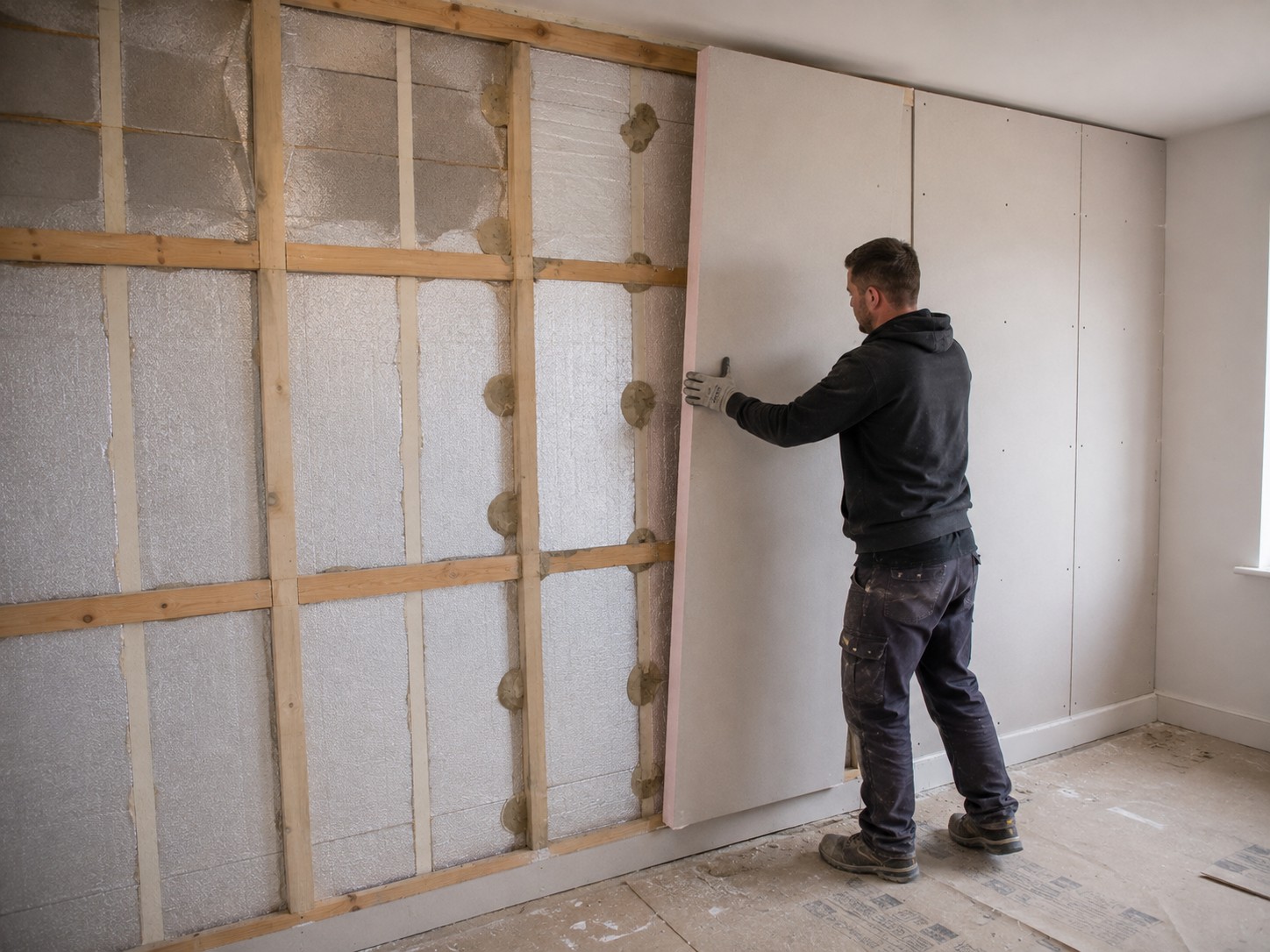
The room is stripped back
Skirting, coving, radiators, sockets and switches come off the walls being done. Furniture out or sheeted and moved to the middle.
The wall is checked and prepared
Anything damp is found and dealt with first. Insulating over a wet wall is how internal insulation gets its bad name.
Insulated board goes on
Bonded to the wall and mechanically fixed, cut round openings, with the joints taped and the reveals boarded in thinner material.
Skim, and everything back
Plaster skim, then skirtings, sockets, switches and radiators reinstated. Ready to decorate, which is yours to do or ours.
What it costs you, beyond the price
Four trade-offs, and what each one actually means on the day.
- Room depth
- The build-up takes a depth off each insulated wall. In a small room it is noticeable. We measure it and put the figure in the quotation.
- Rooms out of use
- A room is unusable while it is being done and while it dries. Doing the house in stages is normal and it is how most people manage it.
- Fixings and fitted furniture
- Anything screwed to an insulated wall needs the right fixing afterwards. Fitted units and kitchens want planning around.
- Cold bridges
- Floors, ceilings and party walls still connect to the cold outside wall. Insulation is returned into the reveals and along the junctions so the cold does not simply travel round the edge.
This is the one where breathability matters most.
Put an impermeable layer on the inside of an old solid wall and you change where moisture in that wall can go. On a period property that is the difference between a warm room and a damp one.
The system is chosen for the wall it is going on — which is why the assessment comes before the specification, and why we hold PAS 2035 rather than buying it in.
PAS 2035 covers the assessment and design, PAS 2030 the installation. Both under TrustMark licence 3288118.
How the job runs
A look at the rooms
Which walls are solid and external, what is fixed to them, and how much depth the rooms can afford.
Assessment and design
Moisture checked, and the system chosen for the wall rather than off a shelf. Formal PAS 2035 on a funded job.
The plan
Which rooms, in what order, and how long each is out of use. Agreed in writing before anything is stripped.
Installation
Strip out, prepare, board, skim, reinstate. Drying time between skim and decoration.
Handover
Certification, the guarantee, and the system documentation for what is on your walls.
After the work is signed off
Once it is skimmed it is a wall, and walls get lived with.
Your paperwork, on the day
PAS 2030 installation certificate, the system documentation, and the full assessment record on a funded job.
A two year guarantee
In writing, transferable if you sell, and insurance-backed.
Fixings, when you need them
We will tell you what to use to hang anything heavy on an insulated wall, and where the noggins are.
One number, and the same team
If a room needs something looked at afterwards, you ring us.
Two things people ask about next
Both have a page of their own.
The questions we get asked most
How much room will I lose?
It depends on the system, and it is measured and told to you before you commit rather than discovered afterwards. In a small room it is noticeable, which is why we say so at the survey.
Do I have to move out?
No. Rooms are done one at a time and the rest of the house stays usable. Each room being worked on is out of use for a few days.
Can internal wall insulation cause damp?
Not when the system suits the wall. A solid period wall needs a build-up that lets moisture move, which is exactly what the assessment establishes before anything is specified.
Can I do one room at a time?
Yes, and most people do. The coldest rooms first is usually the sensible order.
What happens to my radiators and sockets?
They come off and go back on. Sockets are extended forward, radiators refitted, skirtings reinstated.
Is there VAT on internal wall insulation?
No. Insulation is zero-rated until 31 March 2027.
Can I hang things on the wall afterwards?
Yes, with the right fixing. We tell you what to use and where the fixings behind the board are.





















Often worth doing at the same time
Same team, same survey, one visit where it makes sense.
Book a free survey for internal wall insulation
Tell us about the property and we will come and look at it. No charge, and the figures come in writing afterwards.
- A proper survey, and the figures in writing
- Any grant you qualify for, applied for by us
- No charge, whether or not you go ahead
- Weekdays 8am to 5pm, on 01932 550828
We will measure before you decide.
Which walls, how much depth, and what it does to each room. All of that comes before you commit to anything. The survey is free.