
- Home
- Insulation
- Loft insulation
A quarter of your heat, kept.
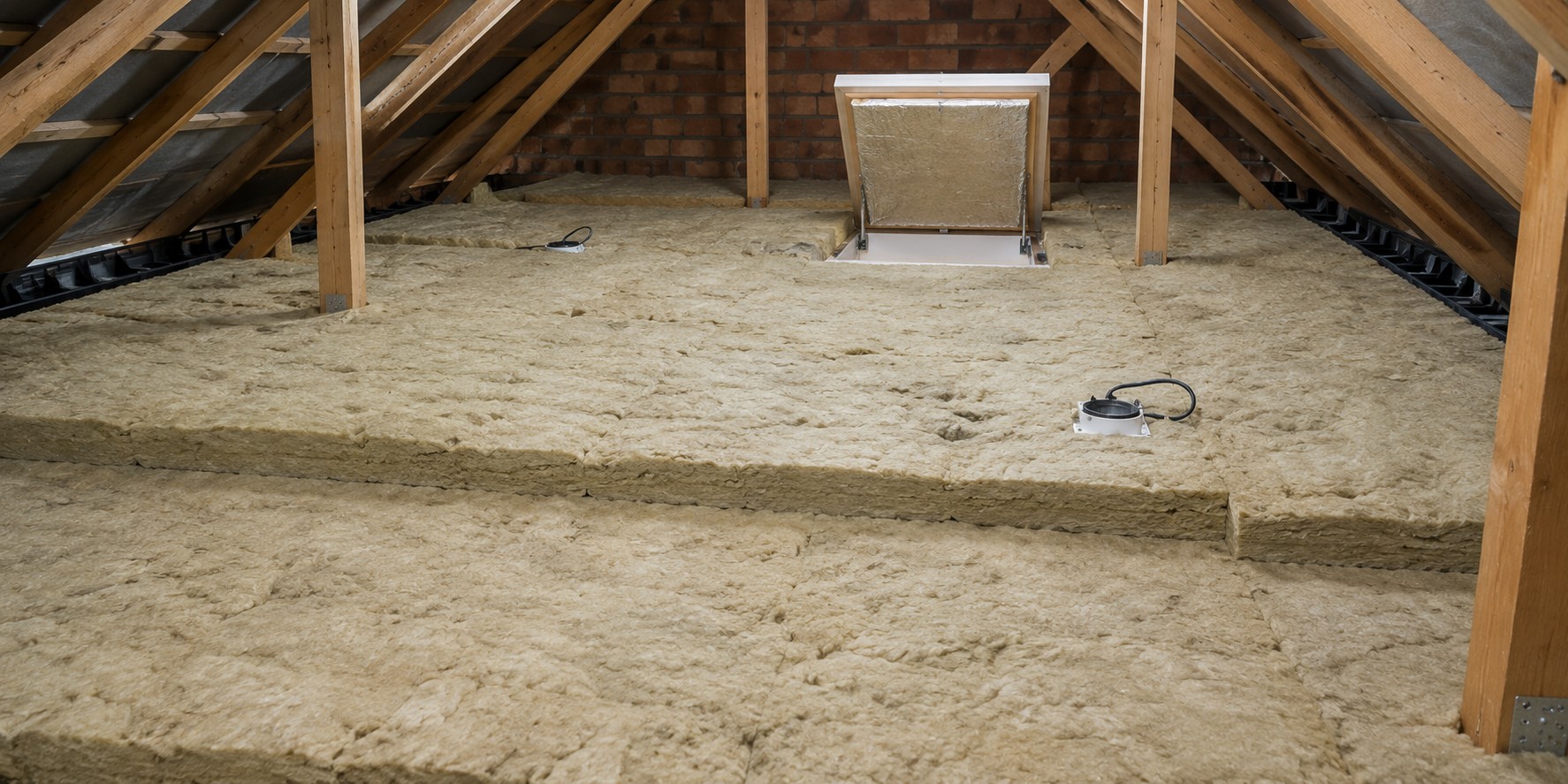
Loft insulation to 270mm, laid properly, by our own installers across Chertsey and Surrey.
Why the loft, first?
Heat rises. The loft is where the least material stops the most of it, which is why every surveyor starts there.
Warm air goes up and keeps going
It reaches the ceiling, and if there is nothing above it, it keeps going into a cold loft and out through the roof.
Insulation slows it down
Mineral wool traps air in millions of pockets. Still air is a poor conductor, which is the whole trick — no moving parts, nothing to service.
Depth is what does the work
100mm was the standard once. 270mm is what is recommended now, and topping up from 100 to 270 is a fraction of the cost of the first 100.
Then everything else gets smaller
A house that loses less heat needs a smaller heat pump and a smaller bill. That is why this goes first and not last.
How it is actually laid
Four things separate a job that works from one that looks the same on the day.
- Two layers, crossed
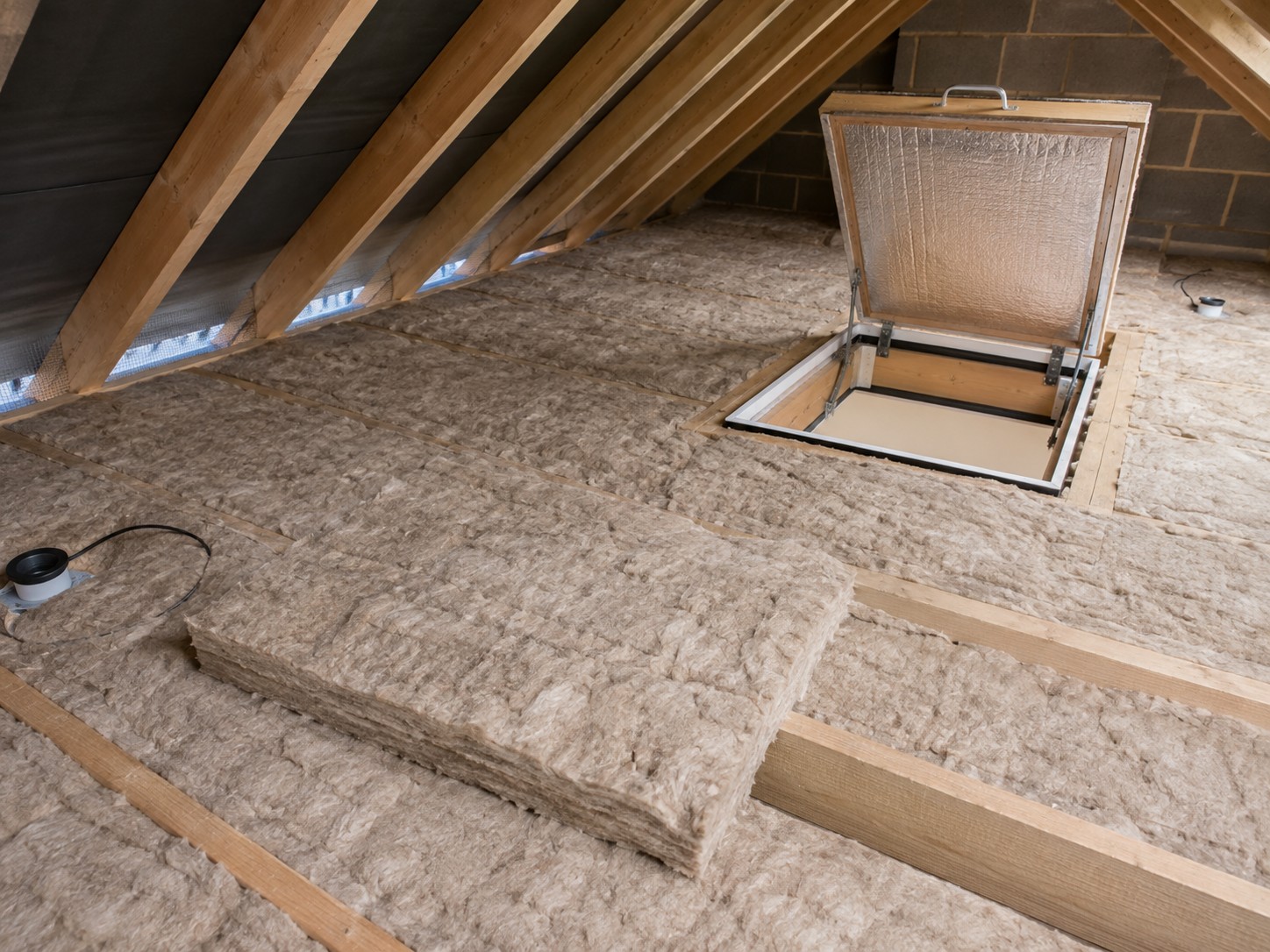
- The first layer sits between the joists, the second runs across them at right angles. That covers the joists themselves, which otherwise conduct heat straight through.
- The hatch and the pipes
- An uninsulated hatch undoes a surprising amount of it. Pipes and tanks in the loft get lagged, because a loft you have just insulated is now a colder loft.
- Ventilation kept clear
- Insulation pushed into the eaves blocks the airflow the roof needs. Vents and trays keep the path open.
- Downlights and cables
- Recessed lights need clearance or a fire hood, and cables buried in insulation have to be de-rated. Both get done properly.
Before, and after
Same loft, same joists. Drag the handle.
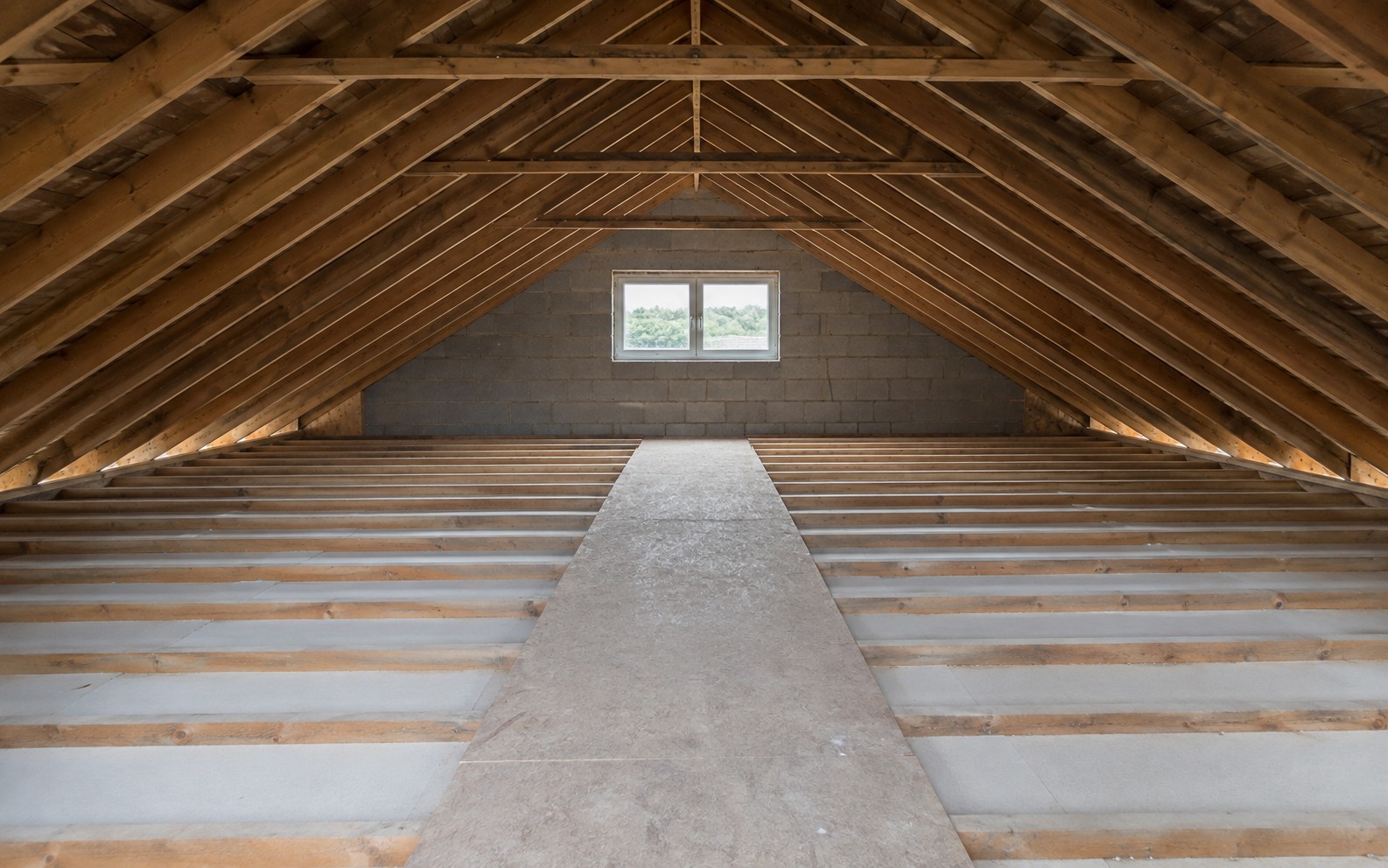
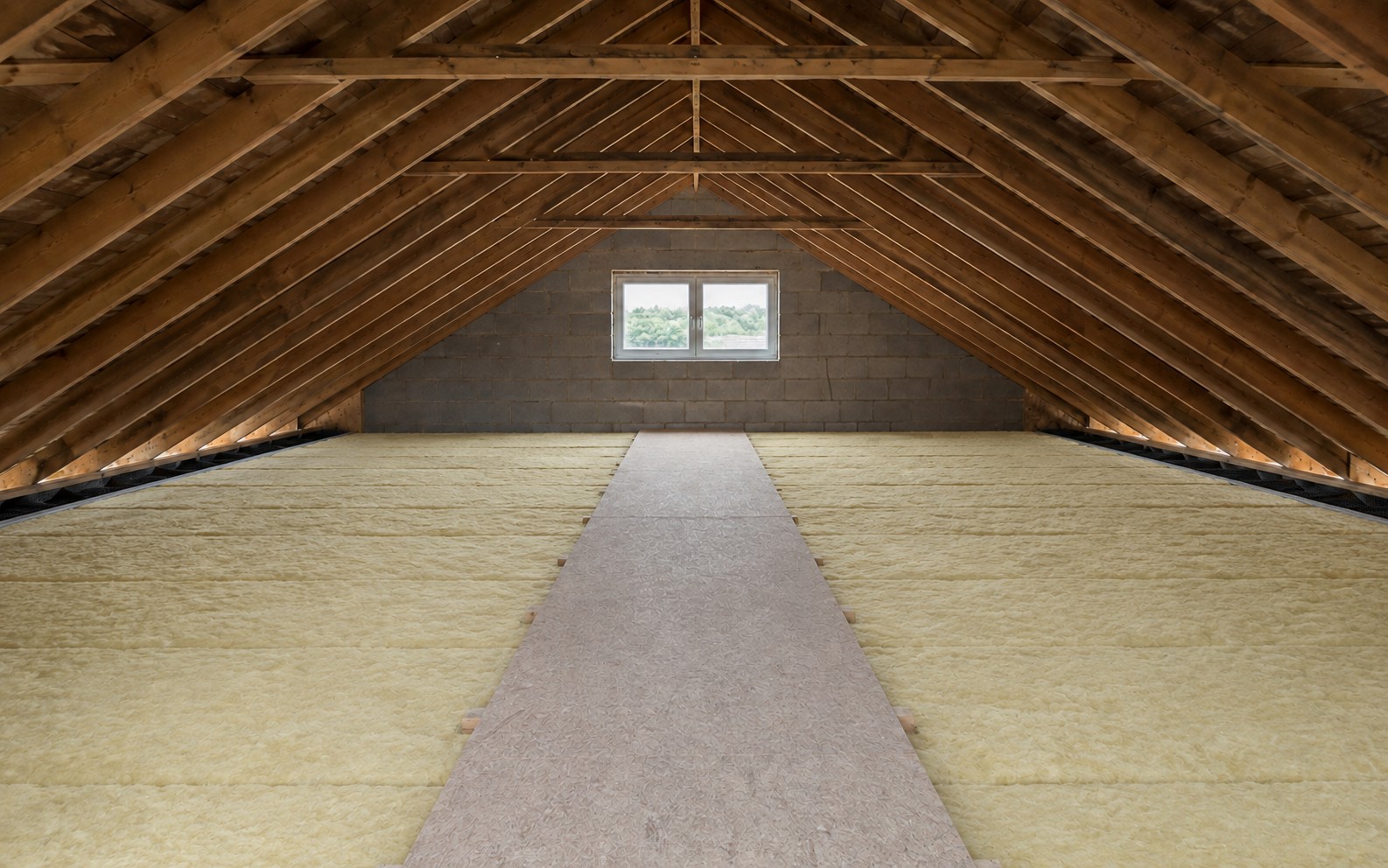
270mm, laid in two layers.
Lofts we have done
Between and over the joists, boarded where it was asked for.
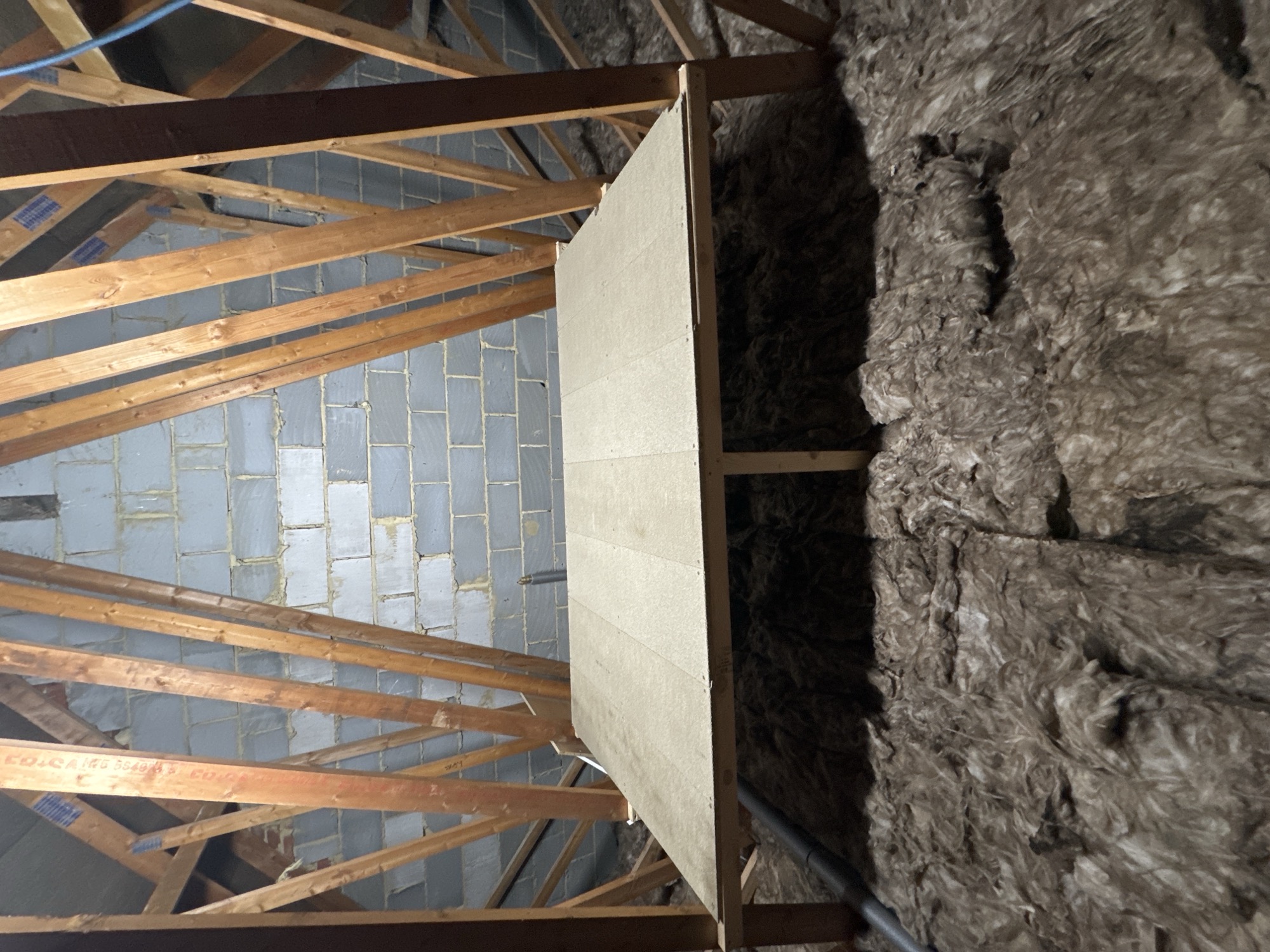
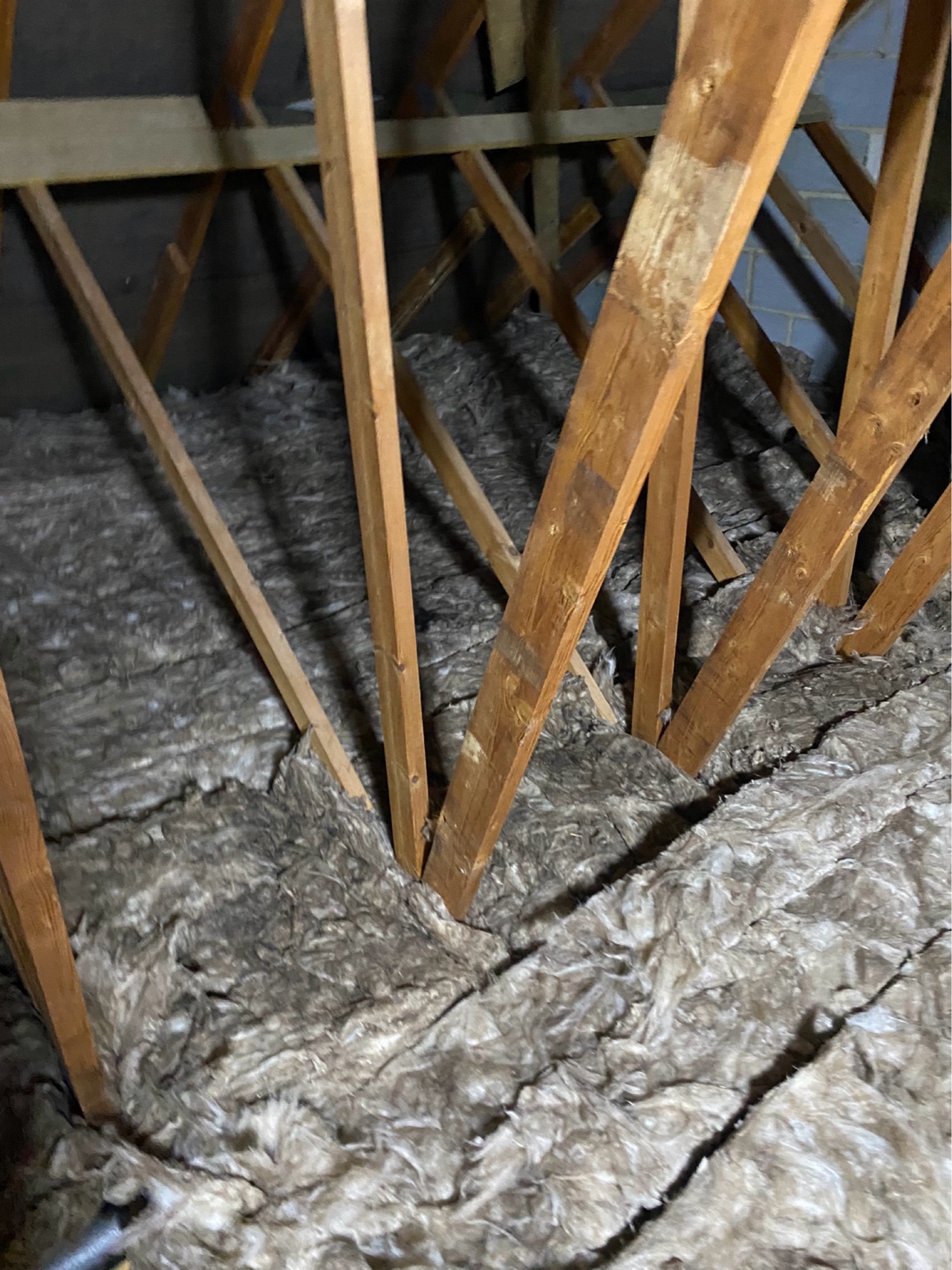
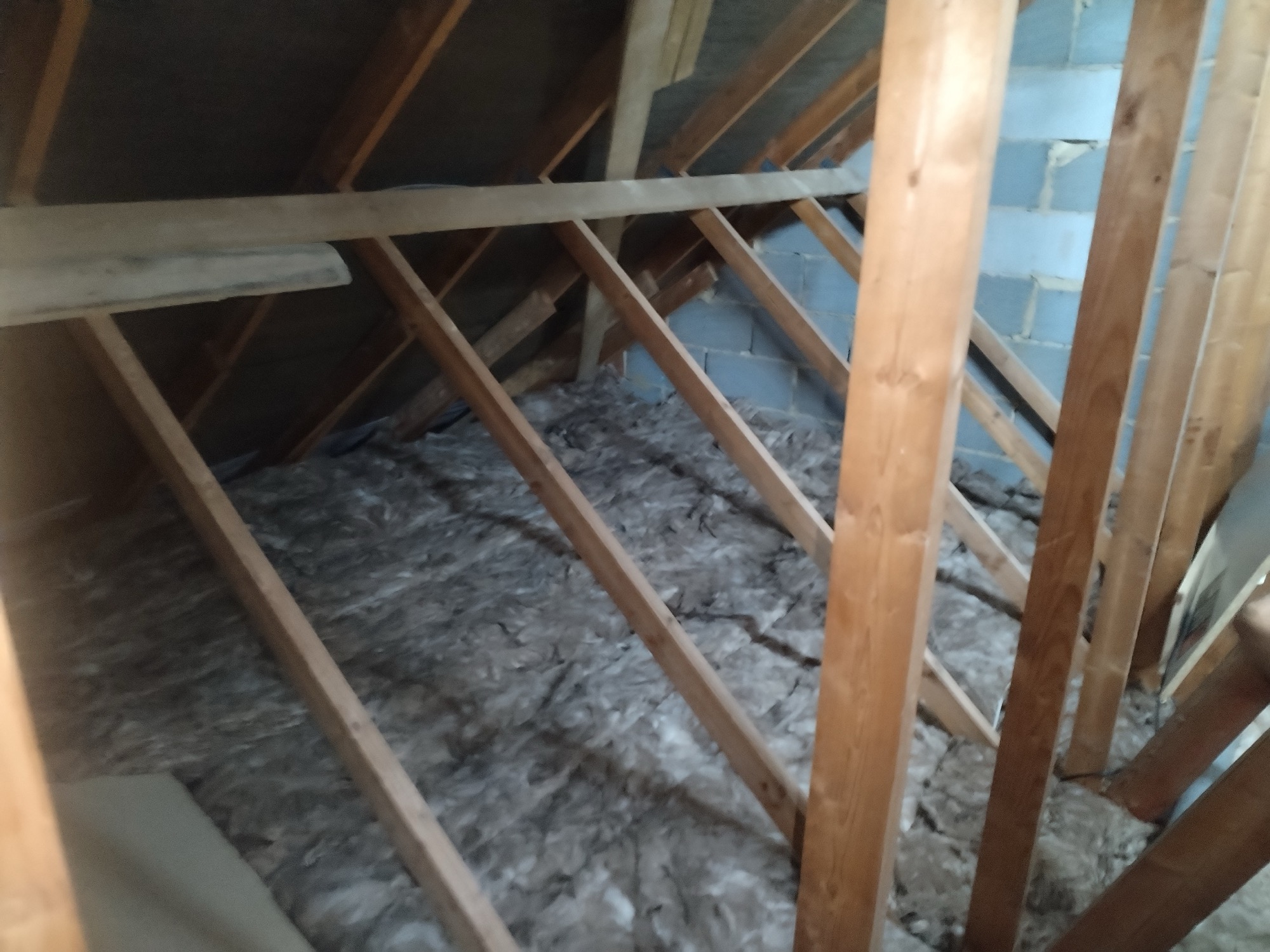
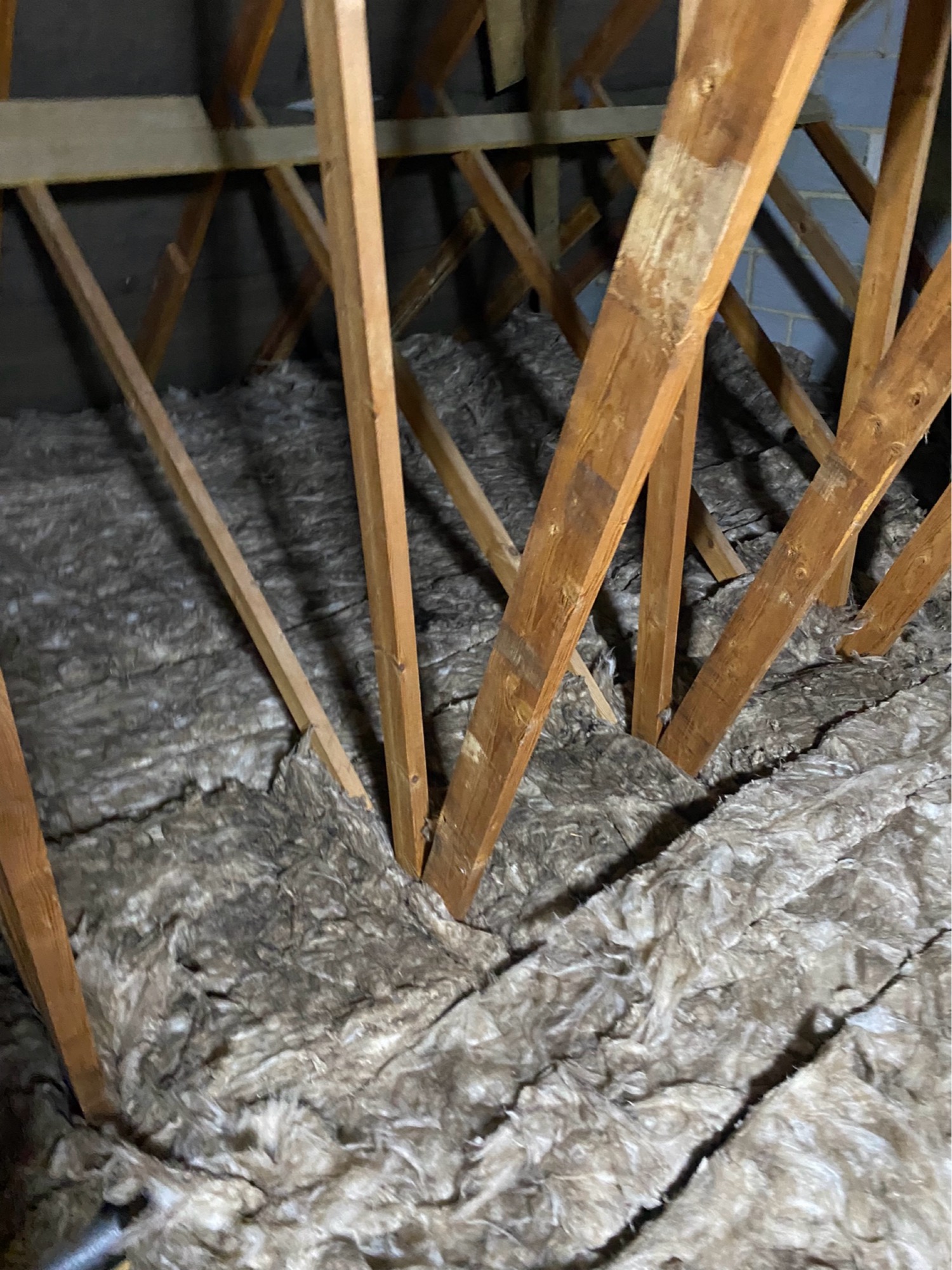
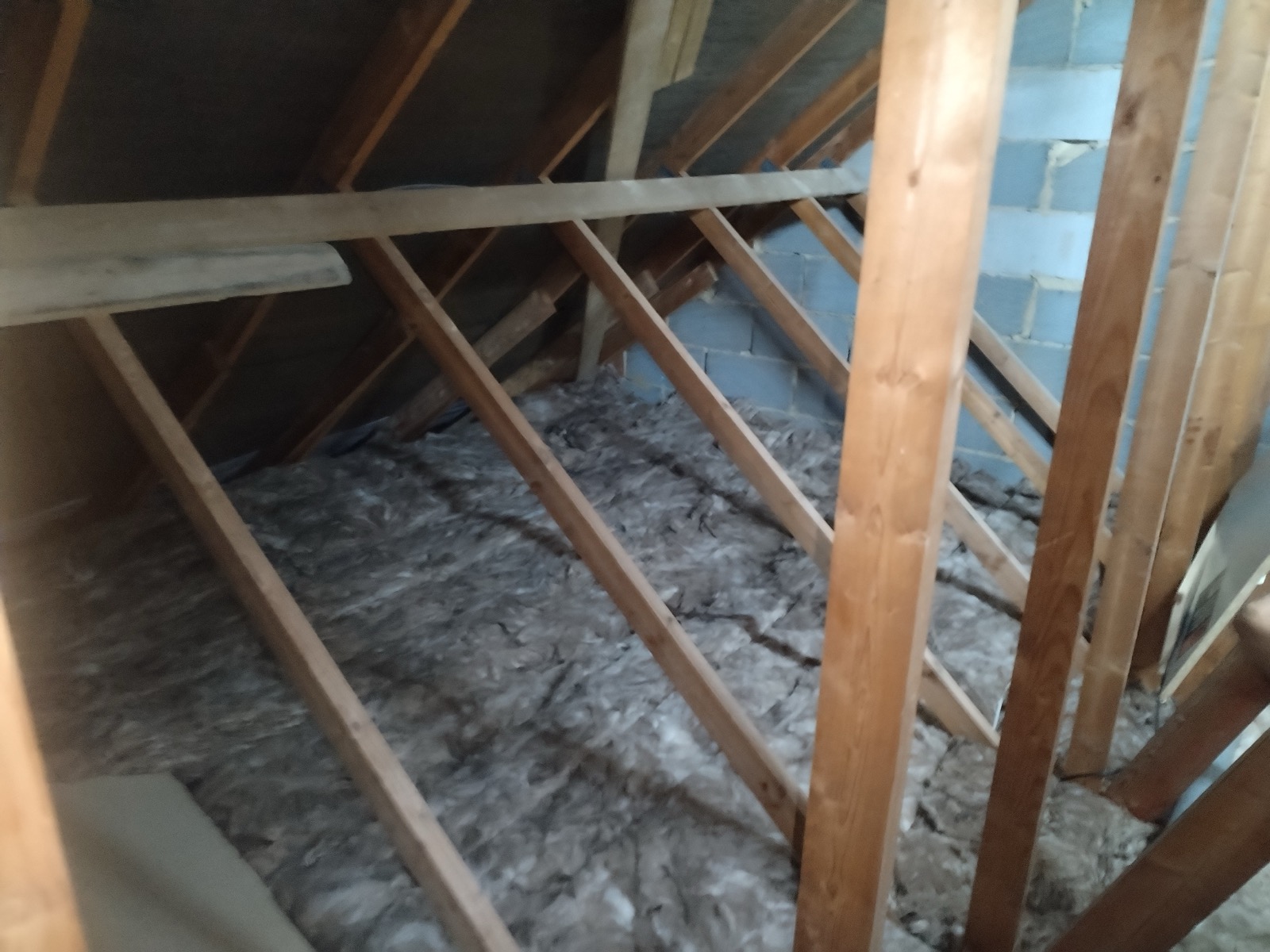
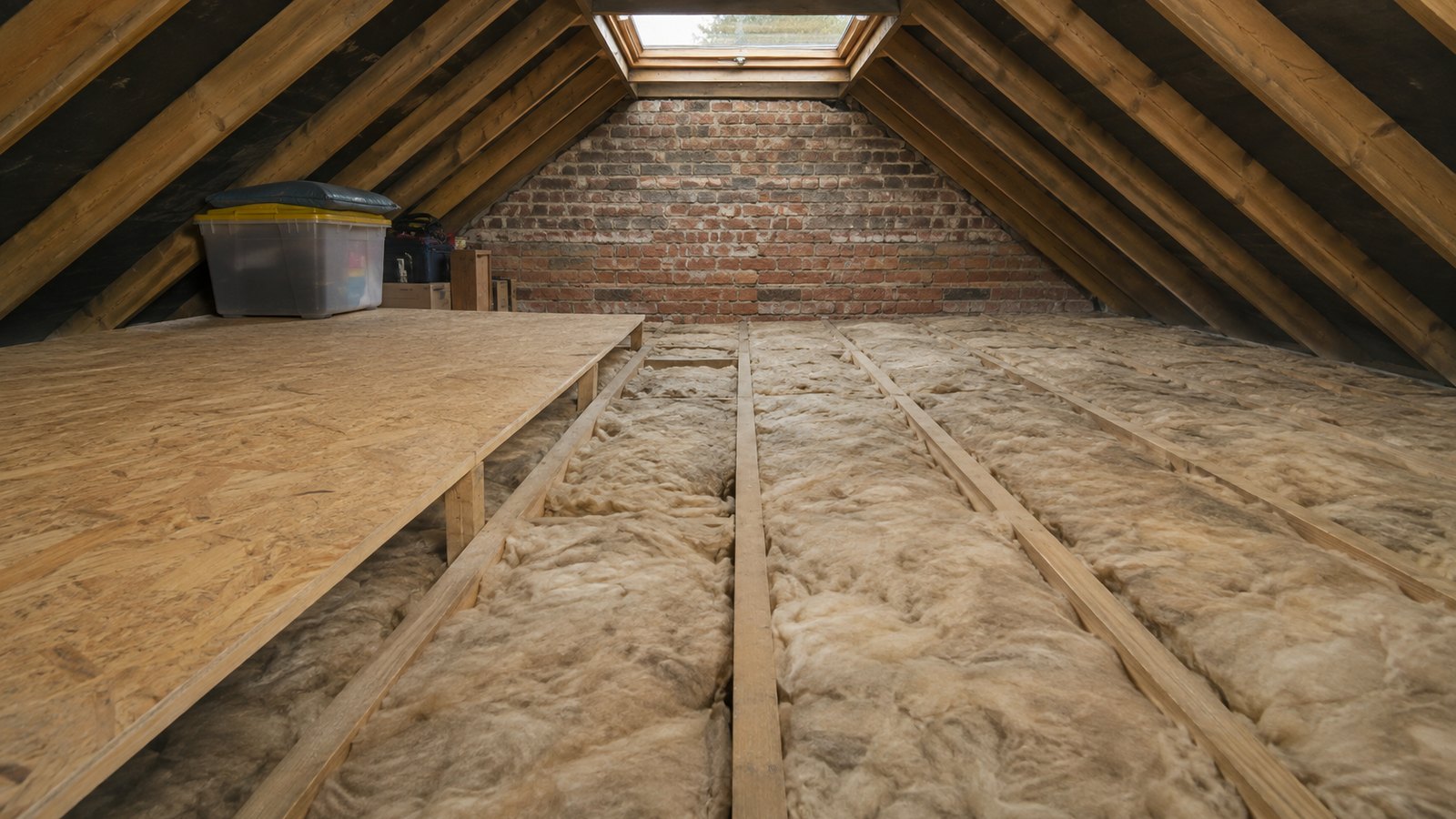
The cheapest measure in the house, and the fastest to pay back.
A loft with nothing in it, insulated to the full 270mm, is the cheapest measure in the house. Topping up an existing 100mm saves less, because the first 100mm has already done the heavy lifting.
It is the shortest payback of anything we fit, which is why it comes first in the order of work and why funded schemes start here too.
Your own saving depends on the house, what is up there now and how you heat it.
How the job runs
A look in the loft
Ten minutes tells us what is up there, how deep it is and whether anything needs moving first.
The quotation
Depth, area, the hatch, the pipework and the full price with 0% VAT.
Funding checked
If a scheme applies we establish that before you commit, not after.
Installation
Most lofts are done in a morning. Boarding and awkward access take longer.
Certification
The paperwork you need for a grant, an EPC or a heat pump application.
After the work is signed off
Insulation has nothing to service, but the paperwork matters later.
Your paperwork, on the day
Installation certificate and, on a PAS 2035 job, the assessment and design records the scheme requires.
A two year guarantee
In writing, transferable to the new owner if you sell, and insurance-backed.
It shows up on your EPC
Loft depth is one of the things an assessor records, and it is one of the cheapest ways to move a band.
One number, and the same team
If something is not right you ring the people who did it.
Two things people ask about next
Both have a page of their own.
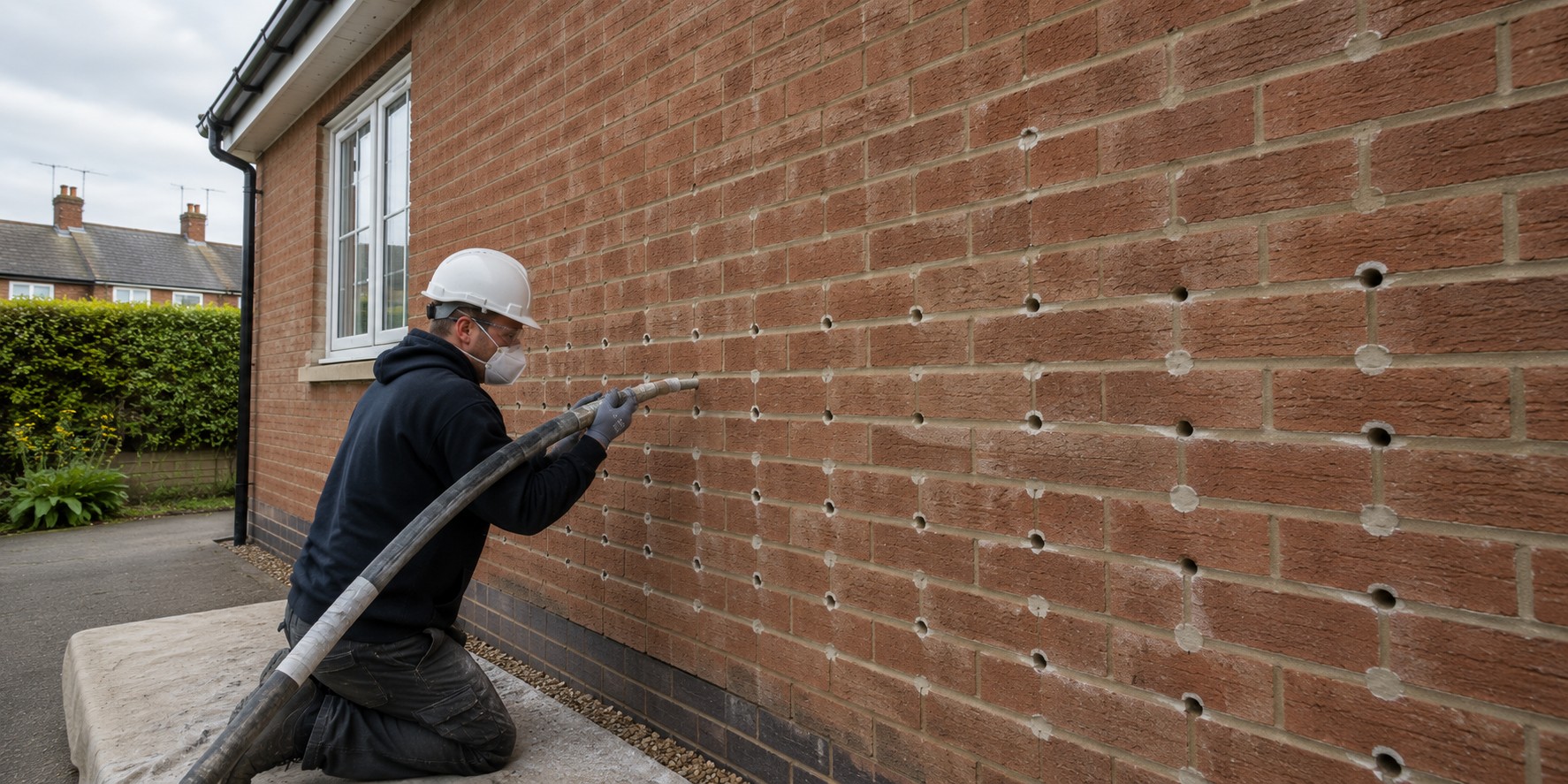
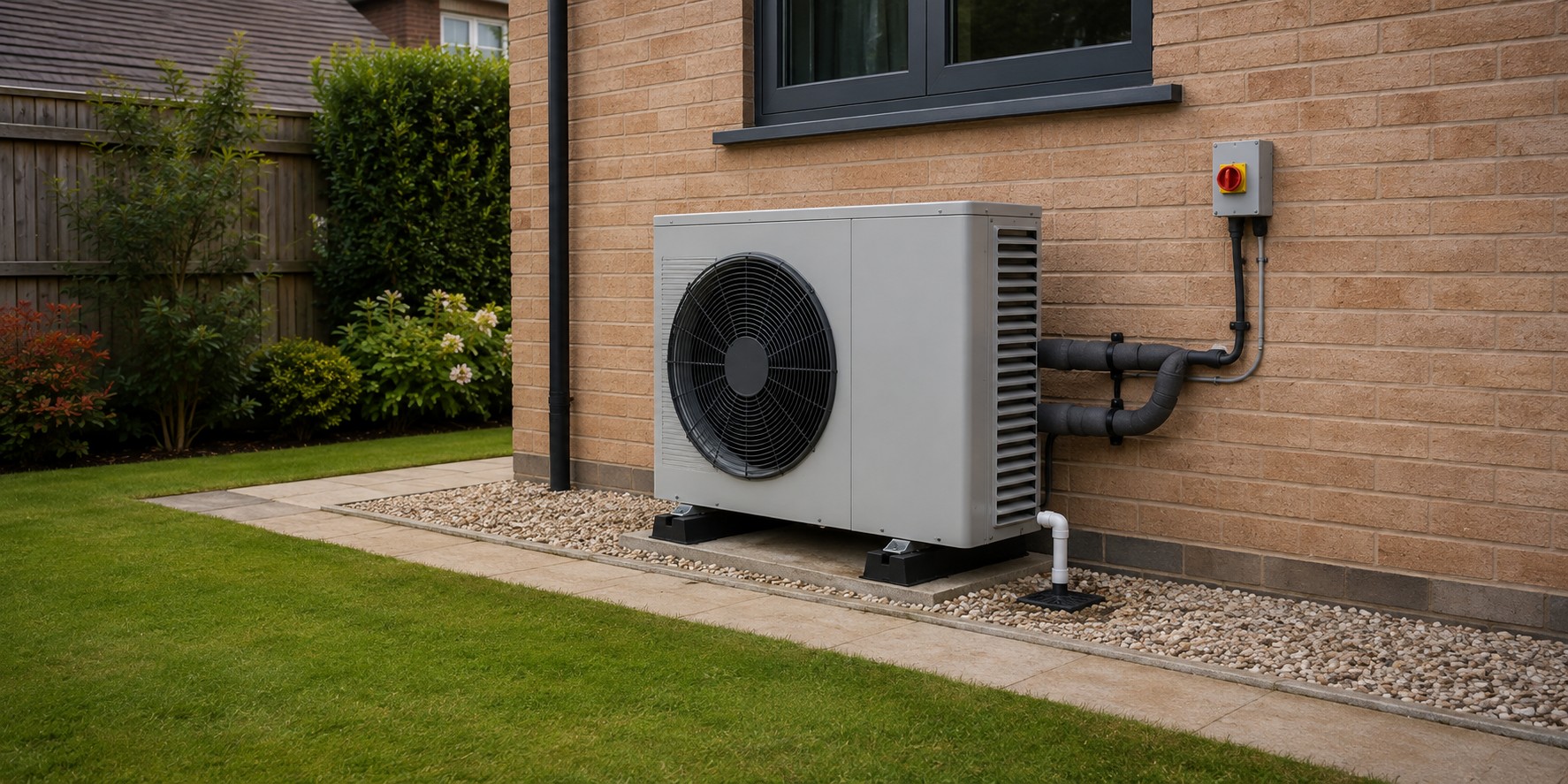
The questions we get asked most
How much insulation should I have?
270mm is the recommended depth. Plenty of houses have 100mm or less, and topping up to 270mm is straightforward and cheap.
Can I still use the loft for storage?
Yes, with boarding raised on legs above the insulation. Boarding straight onto the joists squashes the insulation and undoes most of the benefit.
Will it make the loft damp?
Not if the ventilation is kept clear, which is part of the job. A properly insulated loft is colder than it was, so the airflow through the eaves matters more, not less.
What about the pipes and the water tank up there?
They get lagged as part of the work, for exactly that reason.
How long does loft insulation take?
Most lofts are a morning. Awkward access, a lot of clearing, or boarding will take longer.
Is there VAT on loft insulation?
No. Insulation is zero-rated until 31 March 2027.
Do I need loft insulation before a heat pump?
Not for the grant. The Boiler Upgrade Scheme dropped its loft and cavity insulation condition in 2024. It still helps: a better insulated house needs a smaller unit, which costs less to buy and less to run.





















Often worth doing at the same time
Same team, same survey, one visit where it makes sense.
Book a free survey for loft insulation
Tell us about the property and we will come and look at it. No charge, and the figures come in writing afterwards.
- A proper survey, and the figures in writing
- Any grant you qualify for, applied for by us
- No charge, whether or not you go ahead
- Weekdays 8am to 5pm, on 01932 550828
Ten minutes in the loft tells us everything.
What is up there now, how deep it is, and whether you qualify for help with it. The survey is free.